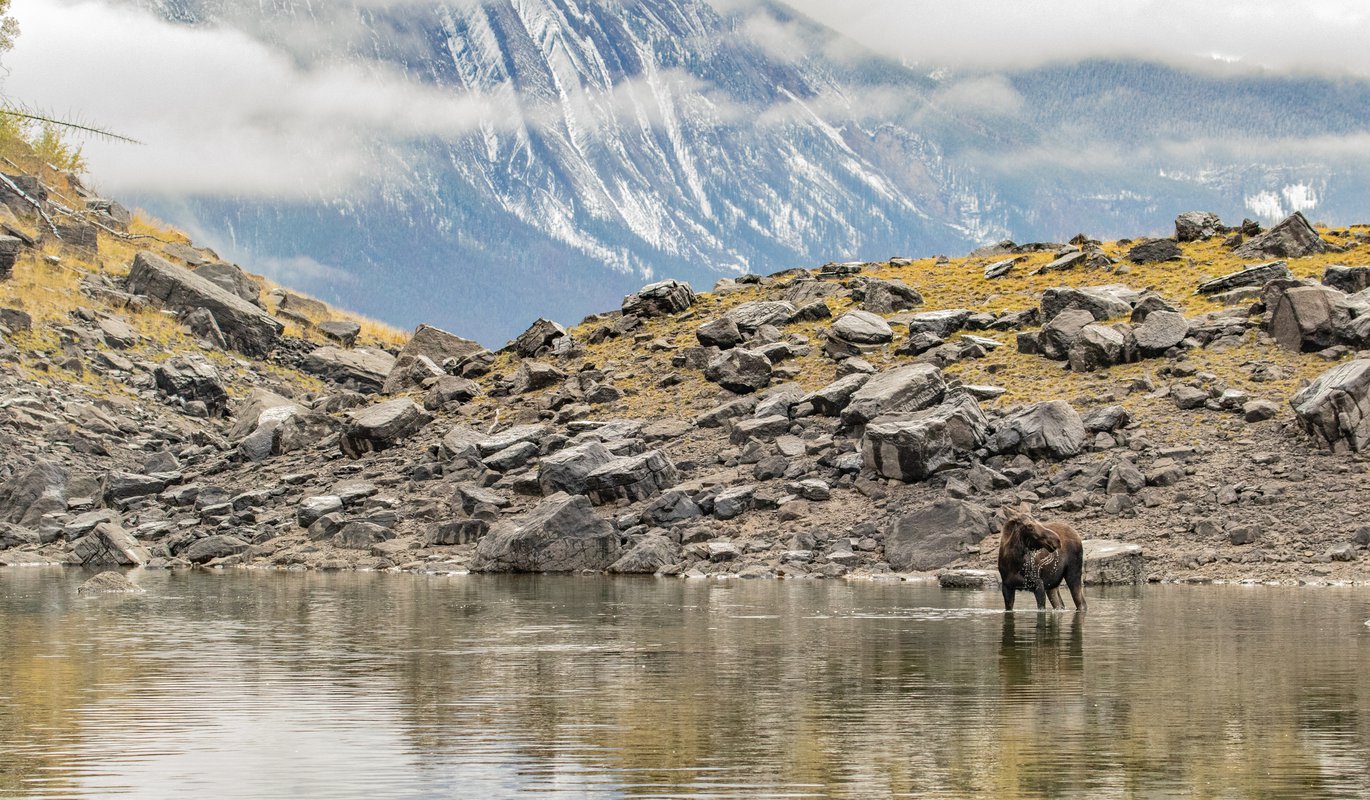

Soon after the springtime sun begins melting snow in Jasper National Park, baby bears start melting hearts. Emerging from hibernation playful and tumbling with their mama bears, these adorable spheres of fluff are one of the most joyful hallmarks of the season. But they're not alone: animals like elk, moose, bighorn sheep, mountain goats and many more of Jasper's wildest residents become easier to spot from April through to early June.
This guide covers:
- Why spring is such a great time to see wildlife in Jasper
- What animals you can see in the Rockies
- Whether going on a wildlife tour is worth it
- Best places, times and tips to spot wildlife
- How to stay safe when you see a wild animal
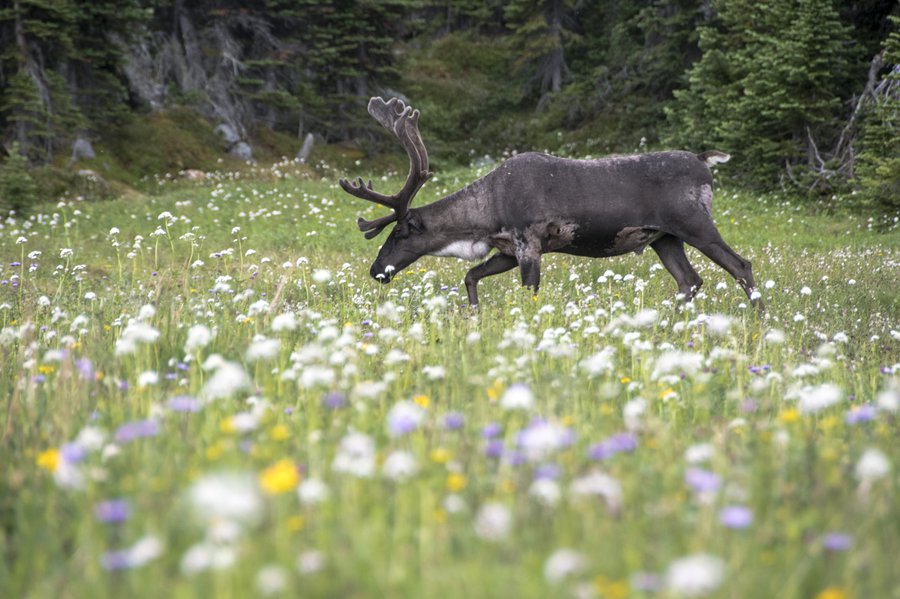
Caribou photo: Parks Canada/Lalenia Neufeld
Why spring is the best time to see wildlife in Jasper
At least, it's the best according to some people (fall, winter, and summer have their advantages too). But honestly there's a lot that gives spring the upper hand when it comes to wildlife viewing. It's the time of year when everything seems to be waking up.
- Bears come out of hibernation
- Baby animals are born en masse and toddle into the world. Note that wildlife safety rules are extra important with cubs/calves/etc; their mothers are fiercely protective and can be dangerous.
- Animals are more often and easily seen as they feed at roadside grass, which greens sooner than the forest.
- Birds are migrating north for the warmer months
With fewer people visiting the national park in the shoulder season, you're also less likely to get caught in a "wildlife jam." Daylight hours expand but not too much (wildlife is most active around sunrise, which arrives at the eye-watering hour of 4 a.m. in the height of Jasper's summer — making spring's 7 a.m. call time seem downright luxurious).
What animals can you see in Jasper
Jasper is home to 53 species of mammals and 277 species of birds (also 40 types of fish, 1 reptile species, 5 amphibians, 20,000 types of insects and 1,300 plant species — but who's counting). This includes many iconic Canadian animals like elk, moose, bears, mountain goats, bighorn sheep, caribou, wolves, and lynx, plus smaller creatures like marmots and pikas.
With its big valleys and lower elevation than many nearby mountain towns, Jasper's habitat makes it a haven for animals, and for the people who want to witness them in the wild. One of the reasons Jasper was declared a UNESCO World Heritage Site was the region's abundant wildlife.
“If you want to see large North American mammals, there are three standout places: Yellowstone, Denali, and Jasper."
Ross Pugh, Maligne Adventures wildlife guide
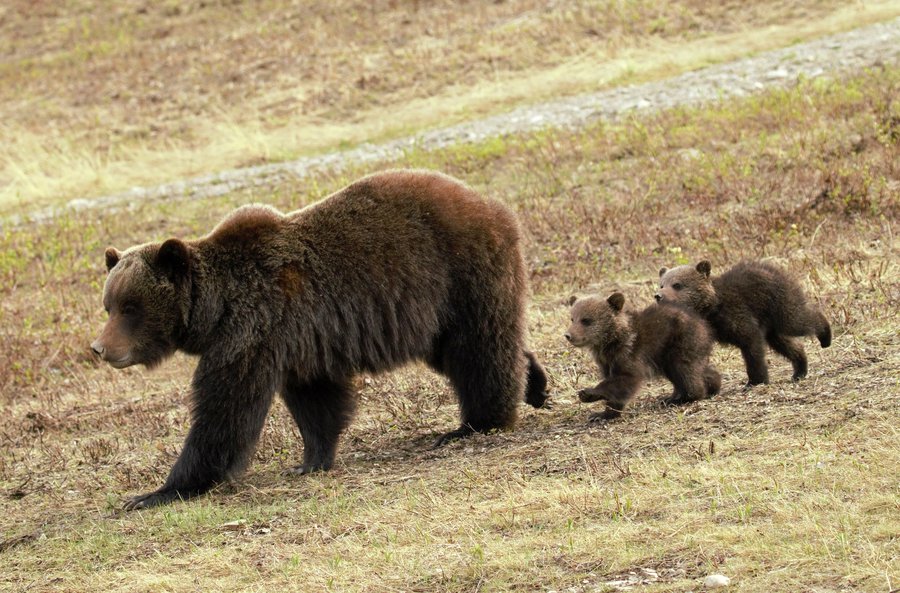
Photo: Simone Heinrich
Is a wildlife tour in Jasper worth it?
While there’s always the possibility of seeing animals on your own, a professional wildlife-watching tour will take guests to lesser-known areas of the park and can increase your chances of a seeing one of Jasper’s furriest residents. A guide doesn't only rely on their own knowledge and experience, they're also tapped into all the other guides' recent sightings. They can also give you a well-rounded understanding of the local fauna and ensure the entire experience is safe for both guests and the wildlife. Plus, letting someone else do the driving means you can keep your eyes on the sights and off the road. Note that sightings can never be guaranteed — these are wild animals and not confined by fences, after all.
Here’s a few of Jasper’s best companies with wildlife-focused experiences.
SunDog Tour Co. — year-round wildlife tours include guided transportation on mini-coach buses with oversized sightseeing windows — some even slide open, enabling unobstructed photography. Guests can also touch genuine horns and furs from local specimens.
Maligne Adventures — highly rated wildlife tours are offered after sunrise or before sunset from May 2 to October 4. Complimentary pick-up is available from select accommodations.
Jasper Hikes & Tours Inc. — Wildlife & Hike experience starts around 7 am and ends mid-afternoon with a picnic lunch provided for an additional fee. Offered in May, June, and September.
Wildlife photography tours
Wildland Photo Tours — is perfect for shutterbugs. Their private wildlife-focused photo tours are capped at 3 participants, last four hours, and run in September and October.
Jasper Photo Tours — has windows that open and insider knowledge of the best spots. Three-hour tours include personalized instruction and insightful critiques.
Jasper Food Tours — E-Bike Safari Eco-Tour passes through areas inaccessible by bus to observe wildlife from a distance.
Further reading:
- Get tips from visiting photographer Seth Macey on how to ethically photograph wildlife.
- Get a taste of SunDog Tour Co.'s wildlife tour
Best places and times to see wildlife in Jasper
A good rule of thumb: if a stretch of road has a 70km/hour speed limit, it is likely a popular area with wildlife (though drivers should be aware that wildlife crossings are possible along any stretch of road). The following corridors are well-known wildlife viewing areas:
- Maligne Lake Road
- Icefields Parkway
- Highway 16, especially near Morro Peak and Disaster Point
- Medicine Lake
The spring wildlife season generally begins in mid to late March when male bears start to emerge from hibernation and the first wildlife sightings are reported. Female bears (without cubs) follow suit in April, while females with cubs are usually seen later in April or early May. This is when many other baby animals also appear, such as elk calves and itty bitty mountain goats. Late May and early June is known as "grizzly season" as these toothy titans move into the valley bottoms for elk calving season.
In summer, wildlife focus on eating enough to fatten up for winter. In fall, the elk rut brings clashing males into dramatic displays
How to stay safe when viewing wildlife
There are three keys to interacting with wild animals:
- Never feed or bait animals.
- Always keep your distance. At least 100 metres from bears and 30 metres from elk, deer, and moose.
- Stay in your vehicle if watching from the road. Prevent wildlife jams by pulling over to the road's shoulder to observe wildlife.
Further reading:
- Bear safety tips
- Parks Canada's wildlife guidelines
Continue reading
Spring Wildlife Viewing in Jasper National Park: How to See Bears, Elk, Moose, and more
Spring is one of the best times of year to see wildlife. Animals like black bears, elk, moose, bighorn sheep, and mountain goats become more active and easier to spot. This guide covers the best places, times, and tips for spring wildlife viewing in Jasper, along with important safety practices to help protect both visitors and animals.